Na minha última newsletter, referi que tinha dificuldade em encontrar alento nas coisas pequenas. Como exercício, decidi então começar a apontar as coisas que me faziam sorrir na rotina. O que em alemão chamam Alltag, o dia-a-dia.
E, de facto, há imensas razões para que, ao fim de quase três anos, ainda esteja a viver em Bad Ischl.
Mas decidi vir aqui falar da mais importante de todas: a forma tão distinta como aqui se vivem as estações do ano.
Nunca tinha vivido verdadeiramente esta passagem do tempo. Aqui, sinto que a vida acontece exatamente da mesma forma que lá fora. Os estados de espírito acompanham as mudanças da natureza, e sinto que este ritmo tão evidente influencia muito a forma como as pessoas vivem, que ainda seguem, inclusivamente, muitos rituais e festas de origem pagã.
Acho lindo que ergam paus, os Maibäume, inclusive no topo das montanhas, para celebrar o início do cultivo. Que façam fogos para celebrar a chegada do verão, os Sonnwendfeuer. Ou até os Krampus, no início de Dezembro, que aterrorizam toda a gente na rua!
Eu sei que chegou a Primavera não só por causa da quantidade absurda de pólen que anda no ar e do facto de tudo começar a ficar verdinho, mas também porque ouço os pica-paus todas as manhãs.
Eu sei que chegou o Verão não só por causa dos Sonnwendfeuer, mas porque a água dos lagos e dos rios aquece e uma pessoa começa a viver o dia como se estivesse sempre de férias.
Que leveza, dar mergulhos.
Mas não é só isso. No verão há ainda um fenómeno climático especial: as tempestades. Adoro aqueles finais de dia em que fico a ouvir a chuva e a trovoada.
Tenho no telemóvel uma gravação ininterrupta de trovões. Por causa do eco nas montanhas, quando se ouve um trovão novo, ainda se estão a ouvir os anteriores, e o som torna-se ininterrupto. Foi dos momentos mais wow da minha vida.
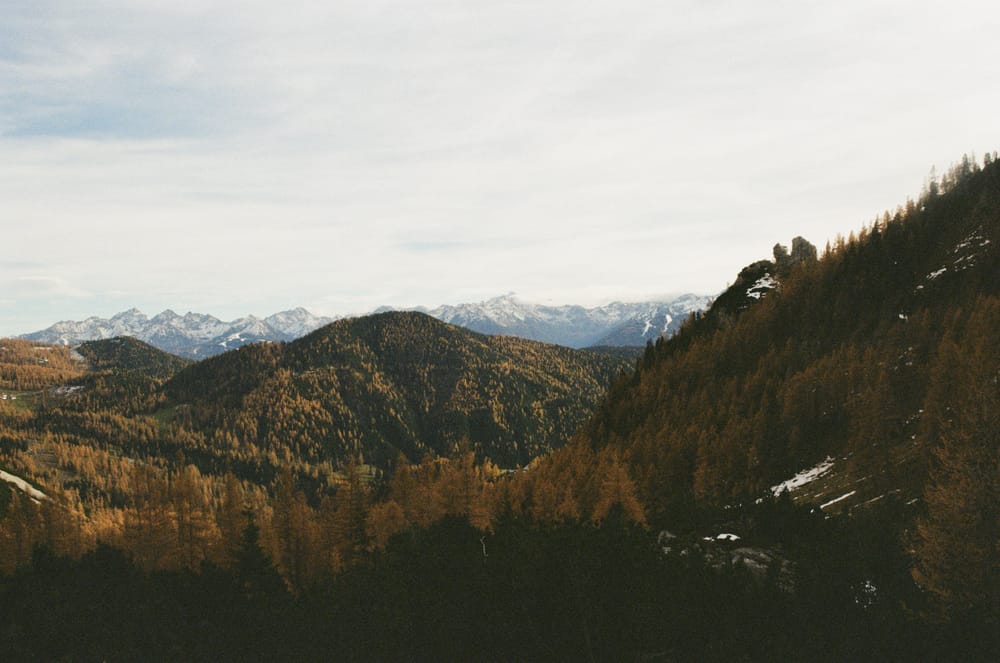
No Outono, que é a minha estação favorita, as temperaturas baixam um pouco, começando para mim a melhor altura do ano para fazer hiking! Nunca subi a uma montanha dececionante aqui. E, com as folhagens outonais e já alguma neve é, para mim, o que se poderia adjetivar de magnífico.
Estas caminhadas são ainda melhores se, no ponto mais alto, houver um hut. E, não sei se é do esforço físico, mas é nesses huts que como as melhores Kaspressknödelsuppe: uma sopa com uns pastéis de pão e queijo fritos lá dentro.
(Os meus amigos de Portugal, que tanto ouvem falar da sopa de panquecas, vão ignorar este facto e dizer que esta sopa deve ser terrível. Mas eu juro que é boa!)
O Inverno, para mim, começa com o primeiro nevão em terras baixas. Apanhar o autocarro 150 para o trabalho num dia de neve e ver o Wolfgangsee debaixo daquele nevoeiro, com tudo à volta branco.
Muitas vezes, os olhos humedecem nessas manhãs.
Mas os meus olhos humedecem facilmente. Foi algo que a idade me trouxe.
E agora reflicto:
Talvez seja estranho que uma das coisas que mais me prende aqui seja a sensação de ver o tempo passar.
ENG
In my last newsletter, I mentioned that I was struggling to find comfort in the little things. So, as an exercise, I decided to start writing down the things that made me smile in my everyday life. What in German is called Alltag, the day-to-day.
And, in fact, there are countless reasons why, after almost three years, I am still living in Bad Ischl.
But I decided to come here and talk about the most important one: the very particular way the seasons are experienced here.
I had never truly experienced the passing of time like this before. Here, I feel as though life happens in exactly the same way as it does outside. Our moods follow the changes in nature, and I feel that this very tangible rhythm has a strong influence on the way people live. People still follow many rituals and celebrations that have their roots in pagan traditions.
I love that they put up poles, the Maibäume, even on top of mountains, to celebrate the beginning of the farming season. That they light fires to celebrate the arrival of summer, the Sonnwendfeuer. Or even the Krampus, at the beginning of December, who terrify everyone out on the streets!
I know spring has arrived not only because of the absurd amount of pollen floating through the air and the fact that everything starts turning green, but also because I hear woodpeckers every morning.
I know summer has arrived not only because of the Sonnwendfeuer, but because the water in the lakes and rivers starts to warm up and you begin to live each day as if you were permanently on holiday.
There’s such a lightness to going for a swim.
But that's not all. Summer also brings another special weather phenomenon: thunderstorms. I love those late afternoons when I sit and listen to the rain and thunder.
I have a continuous recording of thunder on my phone. Because of the echo in the mountains, when a new clap of thunder comes, you can still hear the ones that came before it, and the sound becomes continuous. It was one of the most wow moments of my life.
Then comes autumn, my favourite season. The temperatures drop a little, and, for me, the best time of year for hiking begins. I have never climbed a disappointing mountain here. And with the autumn foliage, and already a little snow, the scenery is, to me, nothing short of magnificent.
These hikes are even better if there is a hut at the top. And I don't know if it's the physical exertion, but it is in these huts that I eat the best Kaspressknödelsuppe: a soup with fried bread-and-cheese dumplings floating in it.
(My friends back in Portugal, who have heard so much about the pancake soup, will ignore this fact and insist that this soup must be terrible. But I swear it is good!)
For me, winter begins with the first snowfall at lower elevations. Taking the bus 150 to work on a snowy day and seeing the Wolfgangsee through the mist, with everything around it covered in white.
Quite often, my eyes well up on those mornings.
But my eyes water easily. It's something age has brought me.
And now I find myself thinking:
Perhaps it is strange that one of the things that keeps me here most is simply the feeling of watching time pass.